CMYK to RGB for Thangka Archives: A Preservation Workflow with TK1265
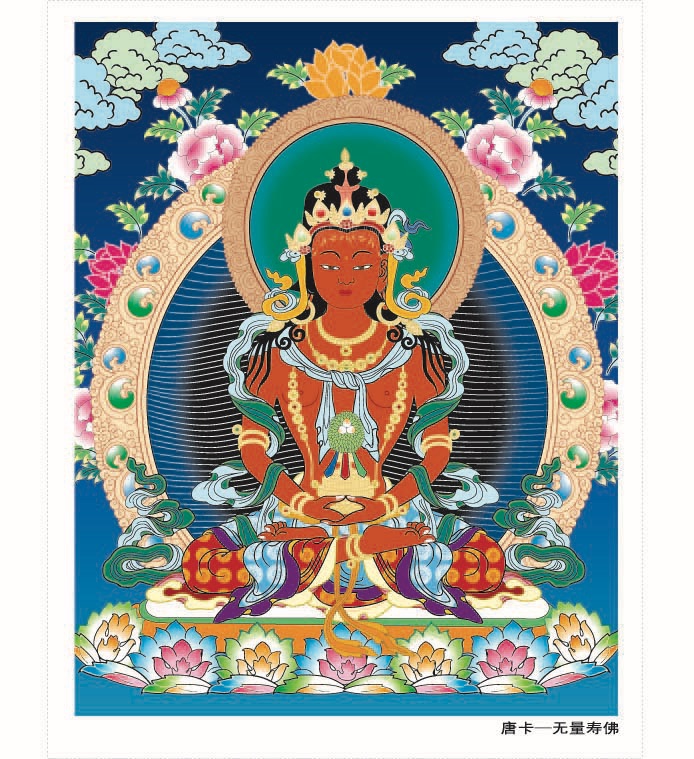
Quick answer: A safe CMYK-to-RGB thangka archive workflow preserves the original file, creates a temporary derivative, converts color for web display, avoids artificial enlargement, records the TK number and visible subject, verifies the uploaded image, and deletes only the temporary copy. TK1265 demonstrates why technical metadata and iconographic description must remain separate.
A CMYK to RGB thangka archive workflow is not simply a matter of clicking “convert” and replacing a file. TK1265 is a compact JPEG measuring 694 by 759 pixels and stored in CMYK color space. Its visible composition closely matches TK1264, but the files are technically different: TK1264 measures 2481 by 3048 pixels, uses RGB, has a different checksum, and contains far more pixel data. Those facts make TK1265 useful for explaining how to prepare an archival image for the web without damaging the source or overstating what the file proves.
The religious identification remains clear enough for a cautious label. A red-orange Amitayus sits cross-legged, wears a jeweled crown and celestial ornaments, and supports a longevity vase in both hands. A halo, ornamental arch, scarves, flowers, clouds, and lotus forms frame the figure. For a fuller iconographic explanation, use the TANGKAWORLD Amitayus identification guide. This article concentrates instead on digital preservation, color space, and archive-version evidence.
What does the TK1265 file actually tell us?
TK1265 directly tells us its pixel dimensions, file format, color mode, file size, checksum, and visible content. The source is a 694 × 759 JPEG in CMYK color space and occupies about 265 KB on disk. These are verifiable technical observations. They do not establish who made the image, when the composition originated, or whether the file reproduces a painting, print, or modern digital drawing.
The file also preserves a complete-looking view of the figure, surrounding floral frame, pale outer margin, and a Chinese title line near the bottom. That broader framing can matter even when the image has fewer pixels than another version. A smaller archive copy may preserve a margin or text strip that a sharper crop omits. Resolution and documentary usefulness are related, but they are not identical.
Why can CMYK look different on the web?
CMYK is designed around cyan, magenta, yellow, and black inks, while ordinary web displays use red, green, and blue light. A browser, operating system, image processor, or content platform may convert CMYK values differently. If the source profile is missing, unusual, or ignored, reds can shift, dark blues can flatten, and pale clouds can change tone.
This does not mean that every visible color difference reflects the original artwork. It may come from scanning, embedded profiles, later editing, JPEG compression, display settings, or conversion software. For TK1265, the safe conclusion is that the source file is CMYK and the web copy has been converted to RGB. It would be unsafe to use either version alone to reconstruct exact historical pigments.
Why should the original file remain untouched?
The original should remain untouched because it is the fixed evidence from which every later derivative can be audited. Replacing it with an RGB copy would erase its original color mode, compression history, metadata, and checksum. Even an apparently helpful rotation, crop, or filename change can break links between the image and an existing catalogue.
A preservation workflow therefore separates three things: the read-only source, a temporary working copy, and the uploaded web derivative. The source remains where it was found. The working copy can be converted and compressed. The web derivative receives descriptive metadata and a stable public URL. Only the temporary copy is removed after the upload has been verified.
How should TK1265 be converted for web use?
TK1265 should be converted conservatively, with no claim that the derivative represents perfect color. The goal is dependable browser display and clear identification, not restoration.
- Inventory the source. Record TK1265, the exact source title, 694 × 759 dimensions, JPEG format, CMYK mode, approximate file size, and checksum.
- Create a separate temporary copy. Never use the source file itself as the conversion target.
- Convert to standard RGB. Use a consistent web-oriented profile and retain enough JPEG quality for line work, jewelry, and small attributes.
- Do not upscale by default. Enlarging 694 pixels into a much larger file adds interpolated pixels, not recovered detail.
- Describe what is visible. Use Amitayus, jeweled crown, longevity vase, archive variant, and TK1265 in the metadata without inventing an artist or date.
- Verify the public media. Confirm the URL returns an image, the ALT text is accurate, and the color conversion has not produced an obvious channel or contrast error.
- Remove only the temporary derivative. Preserve both the read-only source and the verified media-library copy.
Should a smaller archive variant be discarded?
A smaller variant should not be discarded merely because a larger version exists. TK1265 and TK1264 have closely related visible compositions, but they are not byte-for-byte duplicates. Their dimensions, color modes, file sizes, and checksums differ. TK1265 may also preserve framing information that is useful when matching versions or studying how the image circulated.
The correct archive decision depends on purpose. The larger RGB file is better for examining crown details, jewelry, line work, and the leafy form above the vase. The compact CMYK file can still be useful for studying full-image proportions, margin treatment, title placement, and reproduction history. Keeping both under separate TK identifiers preserves these different forms of evidence.
How can researchers compare related image files?
Researchers should compare structure before assuming that similar images are identical. Begin with the outer margins and then move inward through the arch, halo, crown, shoulders, vase, legs, and lotus base. Look for crop changes, shifted text, missing petals, altered color fields, resampling artifacts, and small differences in outlines.
Technical comparison strengthens visual comparison. Pixel dimensions show scale; color mode shows the intended reproduction environment; file size gives limited evidence about compression; checksums establish whether files are exactly identical. None of these fields identifies an artist or date. They document the digital objects, not automatically the historical source behind them.
| Layer | What can be recorded | What must remain uncertain |
|---|---|---|
| Source file | 694 × 759 JPEG, CMYK, TK1265, checksum | Why and when this version was created |
| Web derivative | RGB conversion, public URL, ALT, title, upload record | Exact color of any physical original |
| Visible iconography | Amitayus, crown, ornaments, seated posture, longevity vase | Artist, date, workshop, lineage, and provenance |
What metadata should accompany the web image?
The web image should carry metadata that helps both people and search systems understand the visible subject. A useful title is “Amitayus Digital Archive Variant — TK1265.” Accurate ALT text should identify Amitayus, the jeweled crown, longevity vase, compact archive variant, and TK number. A caption can state that iconography supports the subject while historical attribution remains uncertain.
Technical notes belong in the description or internal archive record, not in inflated provenance language. Record that the public file is a web-optimized RGB derivative of a CMYK source. Preserve the source filename and checksum separately. For a general visual-reading method, consult How to Read a Thangka.
Frequently asked questions
Does converting CMYK to RGB damage the original?
Not if the conversion is performed on a separate copy. The read-only source should remain unchanged, while the RGB derivative is documented as a web-access version.
Should TK1265 be enlarged before upload?
No automatic enlargement is needed. Upscaling can make the pixel dimensions larger, but it does not recover line detail that the 694 × 759 source never captured.
Are TK1264 and TK1265 the same file?
No. They show closely related compositions, but their dimensions, color modes, file sizes, and checksums differ. They should be catalogued as related archive versions rather than collapsed into one byte-identical asset.
Can RGB conversion reveal the original pigments?
No. The displayed colors have already passed through reproduction, scanning or export, compression, profiles, and screens. Pigment claims require evidence from the physical object or reliable technical documentation.
Conclusion
TK1265 shows why responsible digital preservation separates image meaning from file behavior. Amitayus is recognizable through the crown, ornaments, meditation posture, and longevity vase, while the source’s CMYK mode, compact dimensions, and relationship to TK1264 raise a different research problem. Preserving the source, documenting the conversion, avoiding false detail, and retaining related variants protects both iconographic and digital evidence.
Sources and editorial method
This article is based on direct visual analysis of TANGKAWORLD image TK1265 and direct inspection of its file properties, with a technical comparison to archive image TK1264. Visible evidence, religious identification, digital-file observations, and uncertain historical attribution are kept separate. Related context is available in the Amitayus identification guide and the TANGKAWORLD Learn center.
Prepared and reviewed by the TANGKAWORLD editorial team. Last reviewed: August 8, 2026.

