Donor, Devotee, or Patron? Reading the Kneeling Figure in TK0256
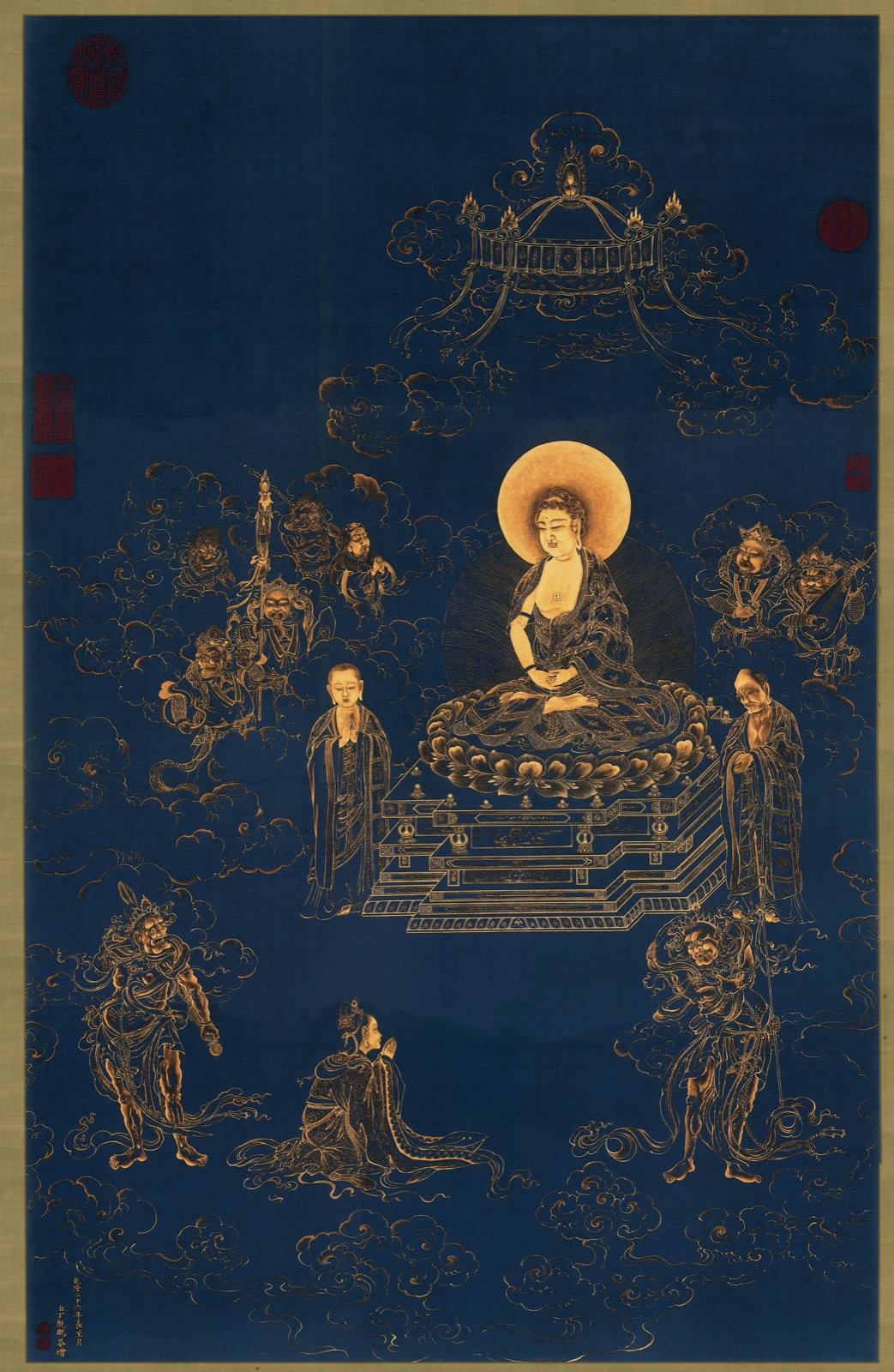
Quick answer: TK0256 shows a richly dressed person kneeling below Amitayus, but posture alone cannot prove that this figure commissioned the work. Placement, scale, costume, gaze, and proximity distinguish the devotee from monks and guardians. Identity, patronage, rank, date, and the filename’s Ding Guanpeng attribution remain uncertain without readable records.
A donor figure in Buddhist painting can be visually prominent yet historically anonymous. In TK0256, a kneeling person occupies the lower center, facing the lotus throne while two large guardian figures stand nearby. The posture clearly communicates reverence. It does not, by itself, tell us whether the person paid for the image, received it, dedicated it, appears as a ruler, or represents a generalized worshipper.
This distinction matters because catalogue language easily turns a visible relationship into an unsupported biography. “Kneeling devotee” describes what the image shows. “Patron who commissioned the painting” makes a historical claim that requires an inscription, colophon, documentary record, or securely identified portrait. TK0256 is therefore a useful case study in how to record social roles without inventing a name.
What is visible in the lower part of TK0256?
The lower register visibly contains a richly dressed kneeling person between two forceful guardian-like figures. The kneeling body faces toward the central throne, the hands meet in a respectful gesture, and a long patterned garment trails across the blue ground. This position makes the figure part of the devotional action rather than part of the surrounding protective retinue.
The two standing figures differ sharply in scale, body type, dress, and energy. Their muscular bodies, animated hair, scarves, and commanding stances create a protective boundary. The kneeling person is smaller, clothed more fully, and directed inward. Those contrasts support a functional description: worshipper below, guardians to either side, sacred center above.
Why is “donor” not automatically the safest label?
“Donor” is not automatically safe because devotion and patronage are different kinds of evidence. A kneeling pose demonstrates homage within the image. Patronage concerns the historical production, dedication, or ownership of the object. The same visual formula might portray a commissioner, recipient, ruler, family member, ritual participant, or ideal devotee.
Small scale can indicate lower sacred rank, but it does not identify a person or prove patronage. Elaborate clothing may suggest status without proving a title, dynasty, or individual identity.
| Visible evidence | Reasonable description | Claim that still needs proof |
|---|---|---|
| Kneeling posture and joined hands | Devotee or worshipper offering homage | Commissioner of the painting |
| Patterned, non-monastic garment | Richly dressed lay figure | Emperor, official, or named patron |
| Position below the central throne | Human participant of lower sacred rank | Historical event shown at a known place |
| Multiple red seal impressions | Marks that warrant transcription and comparison | Signature, ownership, date, or authenticity |
| Archive filename naming Ding Guanpeng | Unverified metadata to preserve as a research lead | Confirmed authorship or Qing-period date |
How does placement distinguish the figures’ roles?
Placement separates devotional, monastic, and protective roles before any individual name is known. TK0256 organizes its figures around the seated Amitayus, who occupies a lotus on a stepped platform beneath a cloud-borne canopy. Every surrounding body relates to that stable center, but each group does so differently.
The kneeling figure creates a line of approach
The kneeling figure turns upward and inward from the lower center. This orientation creates a direct visual path from the human realm toward the throne. The long robe remains close to the ground while the raised hands and face point toward the sacred figure. The body therefore performs approach, humility, and attention.
The standing attendants frame the throne
Two robed figures stand immediately beside the platform. Their shaved or closely cropped heads and long garments give them a monastic appearance. They are calmer and closer to the throne than the cloud-borne warriors. “Monastic attendants” is a useful working description, while their names, order, historical period, and relationship to Amitayus remain uncertain.
The guardians define the outer boundary
The larger lower guardians and the animated figures in the side clouds face, surround, or protect the center. Their weapons or implements, armor-like details, hair, and forceful poses distinguish them from both the kneeling lay figure and the still monks. Exact protector identities should not be guessed when attributes are too small or unclear.
Can clothing identify a patron or ruler?
Clothing can support a broad social category, but it cannot identify a patron or ruler by itself. The kneeling person wears a long, richly patterned garment and an elaborate hairstyle or headdress. These details separate the figure from monastics and minimally clothed guardians, making “lay devotee in courtly dress” a defensible description.
Historical identification requires readable text, reliable provenance, a documented commission, or a securely catalogued comparison. Costume alone cannot preserve a sitter’s name.
The English filename associates TK0256 with the Qing dynasty and Ding Guanpeng. That wording should remain attached to the archive record as prior metadata, but it is not a verified museum record. The image may be connected with that painter or period, yet the local filename alone cannot establish authorship, date, collection history, or authenticity.
Does the Amitayus identification change the donor reading?
The Amitayus identification provides religious context but does not name the kneeling person. The central peaceful Buddha sits on a lotus with both hands resting in meditation at the lap. The archive title identifies Amitayus, and the composition can be discussed within longevity devotion, although the vessel is not crisply legible in the web derivative.
A human figure before Amitayus may participate in a prayer for long life, merit, protection, or dedication. Those are plausible devotional contexts, not documented facts about TK0256. The TANGKAWORLD Amitayus guide explains the attributes normally used to identify the deity; it does not supply the missing identity of this worshipper.
What can the seals and inscription contribute?
The seals and inscription can potentially connect the image to makers, collectors, institutions, dedications, or later ownership, but only after accurate reading. Several red impressions appear around the margins, and a vertical inscription is visible near the lower left. Their presence makes them important research targets rather than instant proof.
A seal may be original, later, copied, or unrelated to authorship. Researchers should preserve every mark and seek specialist transcription before identifying the kneeling figure.
How should a digital catalogue describe the kneeling figure?
A digital catalogue should move from observation to interpretation in explicit steps. The following workflow keeps the record searchable while protecting uncertain history:
- Record the visible action. Note that one richly dressed person kneels with joined hands below the central throne.
- Describe relational position. State that the figure faces Amitayus and stands apart from monastic attendants and guardian-like figures.
- Use a qualified role. Prefer “kneeling devotee,” “worshipper,” or “possible donor” until patronage is documented.
- Separate costume from identity. Record patterned lay dress without assigning imperial, official, ethnic, or personal status.
- Preserve textual evidence. Retain uncropped seals and inscriptions and flag them for transcription rather than guessing.
- Keep attribution fields uncertain. Store the filename’s Qing and Ding Guanpeng wording as unverified source metadata, not confirmed fact.
- Link the evidence. Keep TK0256, image checksum, derivative history, and future catalogue matches together.
This method follows the observation-first sequence in How to Read a Thangka. It also makes later correction easier: a verified inscription can upgrade “possible donor” to a named patron without rewriting the original visual description.
Frequently asked questions
Is the kneeling person definitely the donor?
No. The posture and placement establish a devotee participating in homage, but commissioning or patronage requires documentary evidence. “Possible donor” is appropriate only when the uncertainty is kept visible.
Does rich clothing prove the figure is an emperor?
No. Elaborate lay dress may imply status, but it cannot establish imperial identity, rank, gender, date, or place without readable inscriptions and reliable comparison.
Are the two standing figures beside Amitayus monks?
They appear monastic because of their shaved heads and long robes. Their exact identities and historical relationship to the central figure remain uncertain.
Can the red seals confirm Ding Guanpeng as the artist?
Not from the image alone. Each seal must be transcribed, compared, dated, and assessed as original or copied before it can support authorship or ownership.
Conclusion
TK0256 makes one relationship visually secure: a richly dressed human figure kneels in reverence before a sacred center guarded by powerful attendants. What remains insecure is the person’s biography. Calling the figure a devotee preserves the visible action; calling the figure a named patron requires evidence that the current archive does not yet provide. That distinction turns uncertainty into a useful research record.
Sources and editorial method
This article is based on direct visual analysis of TANGKAWORLD image TK0256. It separates visible posture, costume, placement, figure type, seals, and inscription from religious interpretation and uncertain historical attribution. The English title Amitayus Buddha and TK number are preserved, while the filename’s Qing-period and Ding Guanpeng claims are treated as unverified. For related evidence-led study, consult the TANGKAWORLD Learn center and the beginner’s reading guide.
Prepared and reviewed by the TANGKAWORLD editorial team
Last reviewed: August 12, 2026.

